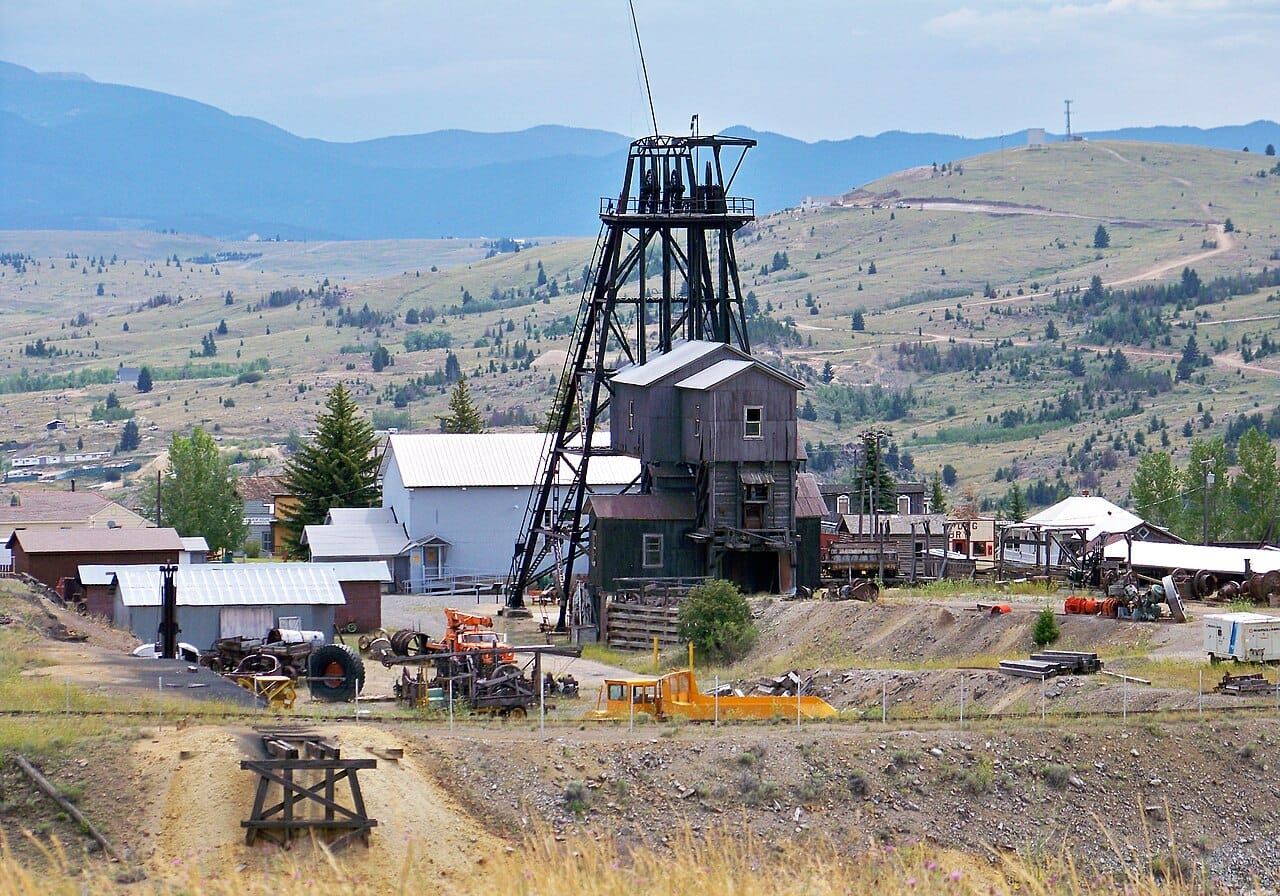
Lode Gold Resources has begun metallurgical drilling at its Fremont gold project in Mariposa County, California, the company said in an August 17, 2026 release. The work is intended to set sampling and testing criteria ahead of a planned large-diameter core drilling program in the parts of the property the company says it intends to develop first.
Lode Gold has engaged an unnamed metallurgical and engineering firm to oversee core sampling protocols, design a multi-phase test program and assess processing configurations. Neither the contractor nor a contract value or program budget was disclosed, so the scale of the spending commitment cannot be assessed from the release.
The stated technical question is which recovery route Fremont would use. Lode Gold says trade-off studies will compare gravity recovery and coarse-particle sorting against conventional flotation, weighing capital and operating costs as well as permitting timelines. Flotation is a chemical process that separates sulphide minerals in a slurry; gravity recovery separates by density and generally uses fewer reagents, which the company links to a smoother permitting path. Grinding size requirements will also be examined, since finer grinding raises power costs.
On recovery, the company is working from older data. A 2014 metallurgical report indicated 91% gold recovery, according to Jon Hill, a director and chair of Lode Gold's technical committee, who said the new program is meant to confirm that figure. "We are conducting a new study to validate the information," Hill said. No updated recovery number has been published.
What the resource looks like
Fremont is a former producer that stopped in 1942 under wartime restrictions on gold mining. The property carries about 43,000 metres of historical drilling, roughly 10,000 underground channel samples, 14 adits and two shafts, and covers more than 3,000 acres of wholly owned private and patented land.
A preliminary economic assessment completed in 2023 was based on 1.16 million ounces grading 1.90 g/t gold in 19.0 million tonnes of indicated resource, plus 2.02 million ounces at 2.22 g/t in 28 million tonnes of inferred material. Those figures use a composite cut-off grade of 0.25 g/t for oxide material, 0.45 g/t for open-pit and 1.45 g/t for underground. Inferred resources carry the lowest confidence category and cannot be converted into reserves without further work. A PEA is itself a preliminary study.
The resource estimate was updated in 2026. Lode Gold says that comparing historical production with the current indicated resource implies 89% of the ounces were left unmined, and that average true widths at a 1 g/t cut-off are 53 metres. Historical mining took place at 10.7 g/t when the gold price was $35 an ounce.
The release states that the broader exploration and drilling program at Fremont is scheduled to begin in summer 2026, the same season in which the announcement was made. The company also holds the Dingman property in Ontario, an orogenic gold deposit with roughly 22,000 metres of drilling, a 2013 PEA and an estimate of 376,000 ounces at 0.94 g/t in the measured and indicated categories plus 47,000 ounces at 0.71 g/t inferred.
The announcement contains no information on cash on hand, spending rate or share count, and no revenue is involved at this stage. Fremont remains a pre-development project whose advance depends on drilling results and on access to further financing. Technical content in the release was reviewed by Gary Wong, P.Eng., Lode Gold's vice-president of exploration, as qualified person under National Instrument 43-101.
Source: Newsfile
This article is journalism, not investment advice. It is not an offer or solicitation to buy or sell any security. Micro-cap and penny stocks carry a high risk of loss, including illiquidity and dilution. Do your own research.