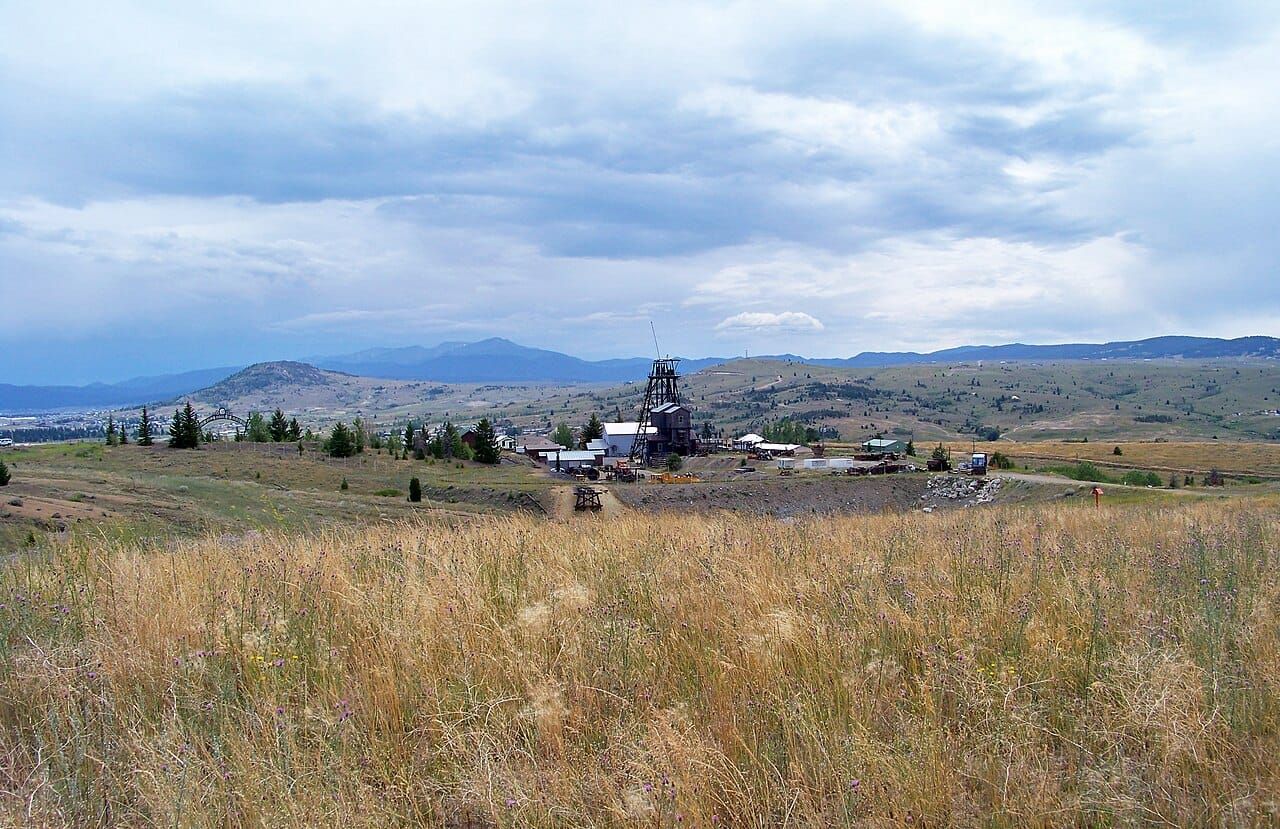
Metalsource Mining reported that hole SH26-20 at its Silver Hill project in North Carolina cut 9.57 metres grading 364 g/t silver equivalent, including a 2.26-metre interval at 913 g/t silver equivalent. The higher-grade section carried 8.4 g/t gold, 37.0 g/t silver, 1.9% lead, 12.8% zinc and 0.6% copper.
A second hole, SH26-21, drilled as a down-dip step-out beneath SH26-20, returned 15.3 metres at 207 g/t silver equivalent, with a 2.44-metre interval at 515 g/t including 7.3% lead and 47.4 g/t silver. The company says the two holes are step-outs of roughly 55 metres down plunge and extend drilling at the project to approximately 335 metres below surface.
Silver equivalent is a single number that rolls gold, silver, lead, zinc and copper into one figure. The calculation here uses 200-day moving average metal prices as of 6 February 2026 and, more notably, metal recoveries taken from batch metallurgical testing completed in 1988. Recoveries applied range from 89.2% for lead to 95.5% for gold. Investors reading the equivalent grades should treat them as a company estimate rather than a measured result.
Metalsource also states that the reported widths are core lengths, not true widths, because it does not yet have enough data to estimate the true thickness of the intercepts. The release adds that the results are preliminary and insufficient to define a mineral resource, and that further drilling is needed to establish continuity, geometry and grade distribution.
Why the second hole was drilled
According to the company, SH26-20 was a follow-up to SH26-19, drilled specifically to characterise the grade of material lost in that earlier hole — a data-continuity issue that matters for any future resource estimate. Metalsource says the combination of the two holes shows that grade can vary substantially over short distances along strike and down dip, meaning a weak intercept can sit close to a strong one.
In SH26-21, the company says elevated silver accompanied higher lead values, which it reads as evidence that the galena — lead sulphide — at Silver Hill is silver-bearing, and that silver tracks lead-enriched zones.
Chief executive Joe Cullen said the distribution of metals is not random. "We're beginning to see patterns that can help us vector toward the higher-grade portions of the system," he said in the release.
Drilling still outstanding
The collar table published with the results lists 27 holes drilled at Silver Hill since 2025. One, SH26-09, was abandoned at 15 metres. Ten holes are still awaiting assay results, including seven of the eight most recent holes collared at the same setup as SH26-20 and SH26-21. Collar surveying is described as in progress, and reported collar elevations are expected to change.
Metalsource says recently completed induced polarisation surveys — a geophysical method that measures how rock responds to an electrical current — have flagged additional targets inside and outside the historic mine footprint that have not been drilled. The company says it intends to expand drilling capacity to test those targets while continuing to step out from known mineralisation, and that it is evaluating additional land.
No budget, drill metreage or timeline was attached to the expanded programme, and the release contains no financial information: no cash position, no spending rate and no financing details.
Samples were assayed by ALS Geochemistry in Reno and ALS Canada in Vancouver, using four-acid digestion with ICP-AES, ICP-MS and fire assay. Standards, blanks and duplicates were inserted into the sample stream.
Separately, the company granted 450,000 restricted share units to consultants and certain officers, with a five-year term. Of these, 300,000 vest over three months and 150,000 over one year, with a statutory hold of four months and one day. No total share count was given, so the dilution effect cannot be measured from the release.
Silver Hill covers 1,225 acres in Davidson County, North Carolina. Metalsource says known mineralisation extends to 550 metres from surface in a series of steeply dipping lenses.
Source: Newsfile
This article is journalism, not investment advice. It is not an offer or solicitation to buy or sell any security. Micro-cap and penny stocks carry a high risk of loss, including illiquidity and dilution. Do your own research.